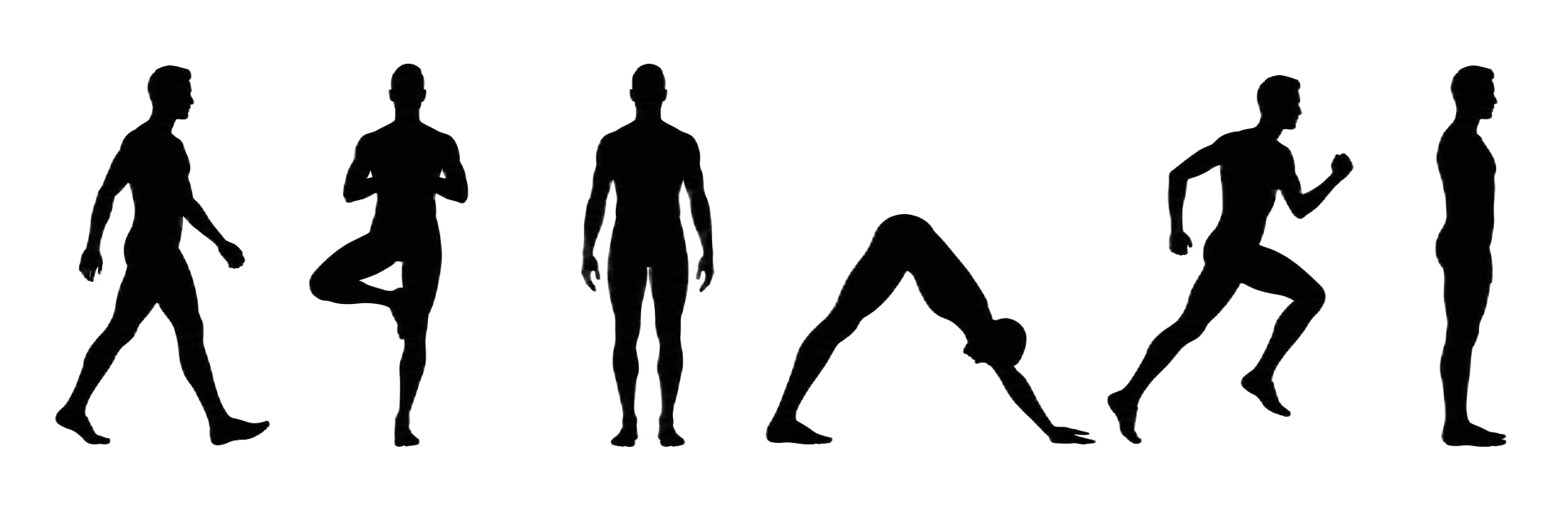
Posture · Movement · Balance · Stability
Depends on how the brain answers two questions…
Where am I in my environment?
Where is the environment in relation to me?
Visual system
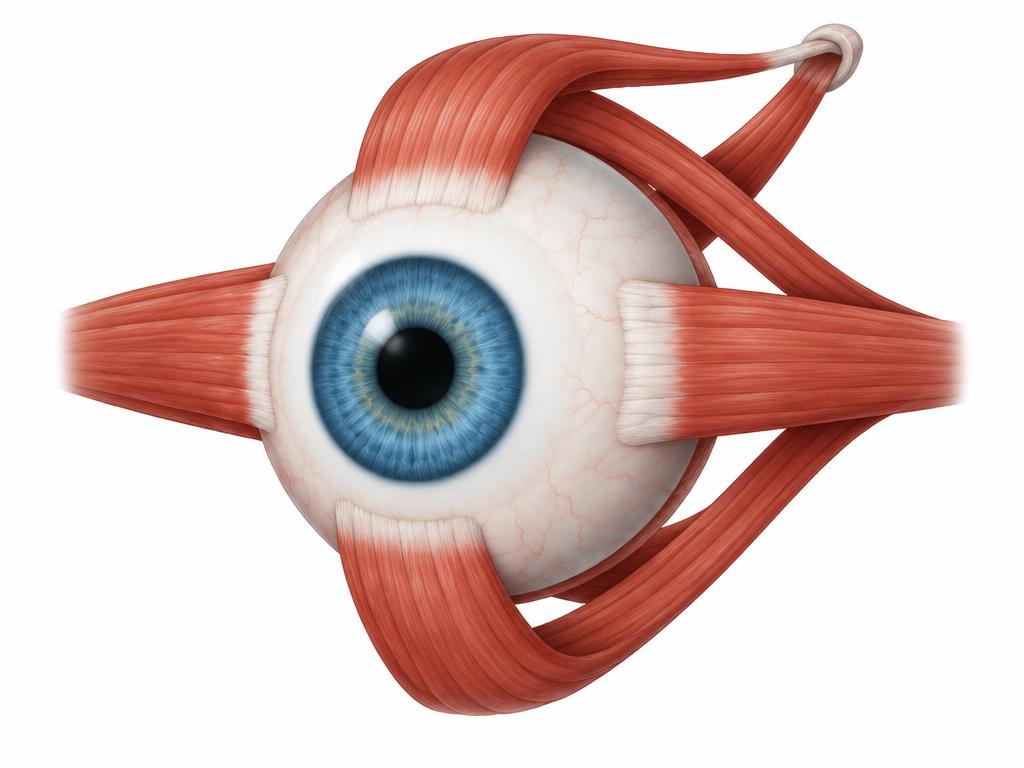
Visual system
- Retina → optic nerve (II) → chiasm → optic tract → lateral geniculate nucleus → visual cortex
- Optic flow, fixation and environmental references support orientation
- Saccades shift fixation; smooth pursuit follows moving targets; vergence aligns both eyes
| Eye muscle | Cranial nerve | Actions |
|---|---|---|
| Medial rectus | III | Adduction |
| Lateral rectus | VI | Abduction |
| Superior rectus | III | Elevation, adduction, intorsion |
| Inferior rectus | III | Depression, adduction, extorsion |
| Superior oblique | IV | Intorsion, depression, abduction |
| Inferior oblique | III | Extorsion, elevation, abduction |
Muscle actions vary with gaze position. Coordinated gaze involves nuclei III, IV and VI and the medial longitudinal fasciculus, not a simple left/right brain rule.
Central integration
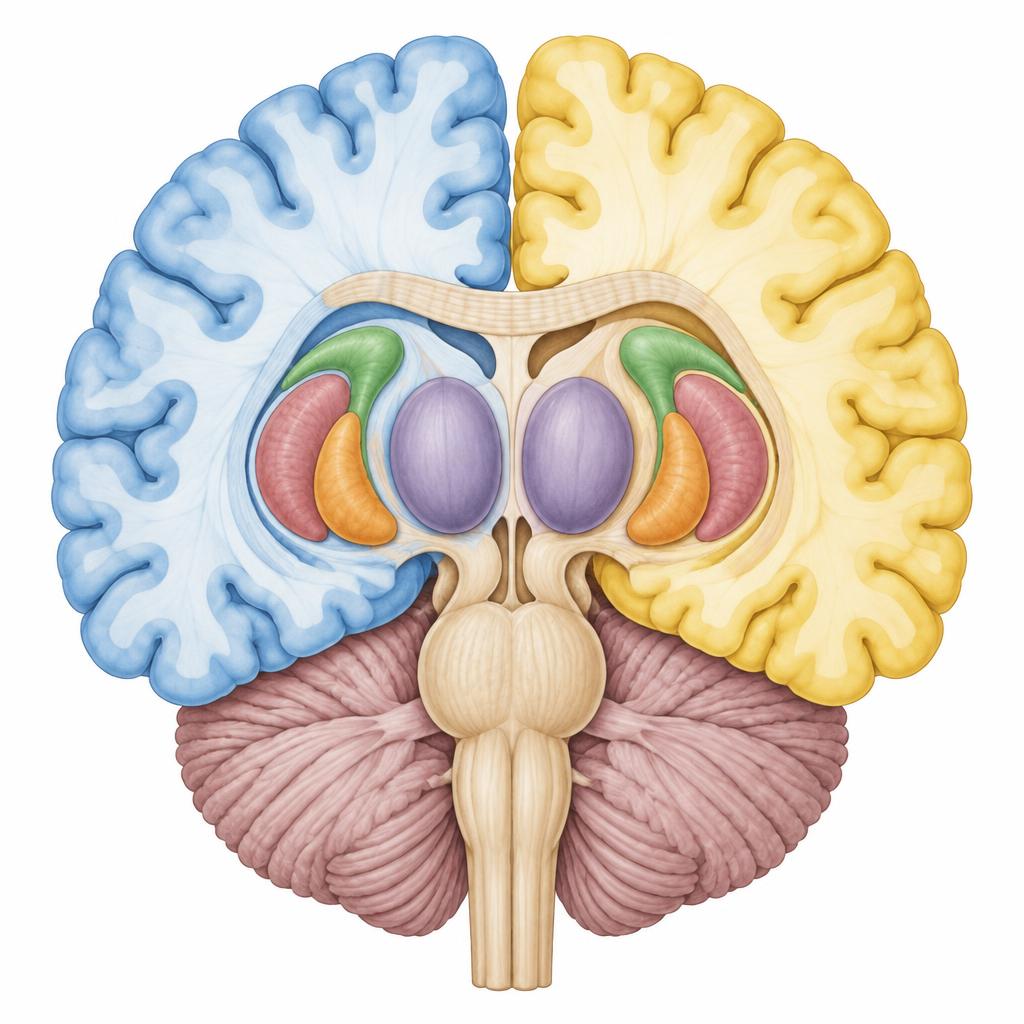
Central integration
- Brainstem and spinal circuits: rapid postural responses
- Cerebellum: prediction, calibration and error correction
- Thalamus and cortex: perception, attention and task-dependent control
- Basal ganglia: selection and scaling of movement
- Corpus callosum: exchange between the hemispheres
Sensorimotor loop
- Sensory receptors
- Afferent nerves and pathways
- Spinal, brainstem and brain networks
- Descending motor pathways
- Muscles and joint mechanics
- Movement → new sensory feedback
Auditory and vestibular system
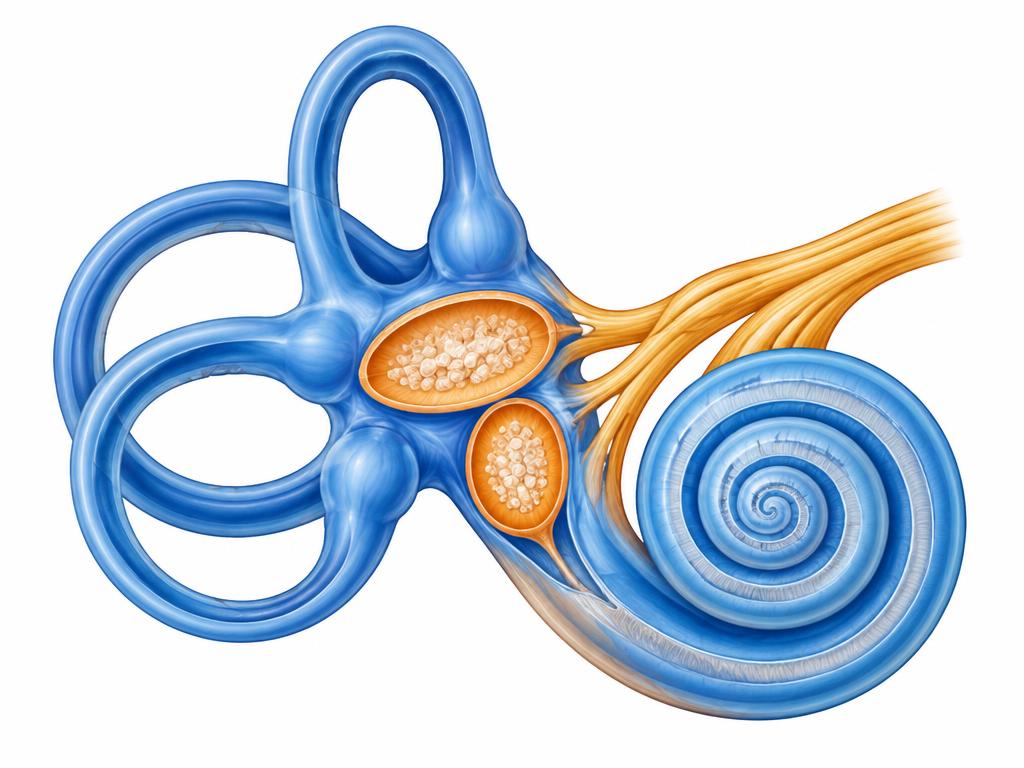
Vestibular system
- Semicircular canals: angular head acceleration
- Utricle and saccule: linear acceleration and orientation relative to gravity
- Vestibular nerve (VIII) → vestibular nuclei and cerebellum
- Vestibulo-ocular reflex stabilizes gaze during head movement; vestibulospinal pathways contribute to posture
Inner ear landmarks
- Cochlea: hearing; semicircular canals, utricle and saccule: vestibular sensing
- Auditory cues can aid environmental awareness; they are not a substitute for vestibular input
Somatosensory system
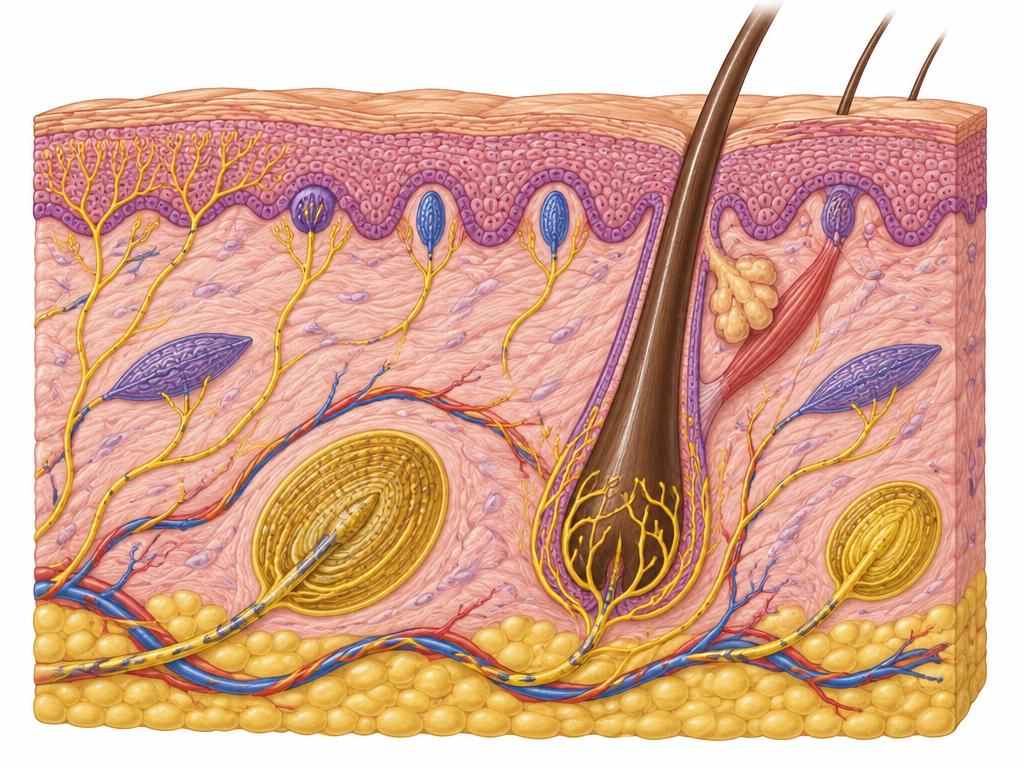
Skin receptors
- Free nerve endings — pain, heat and cold
- Merkel disks — sustained light touch
- Meissner corpuscles — light touch and flutter
- Pacinian corpuscles — deep pressure and vibration
- Ruffini endings — skin stretch
- Root hair plexus — hair movement
- Krause end bulbs — touch
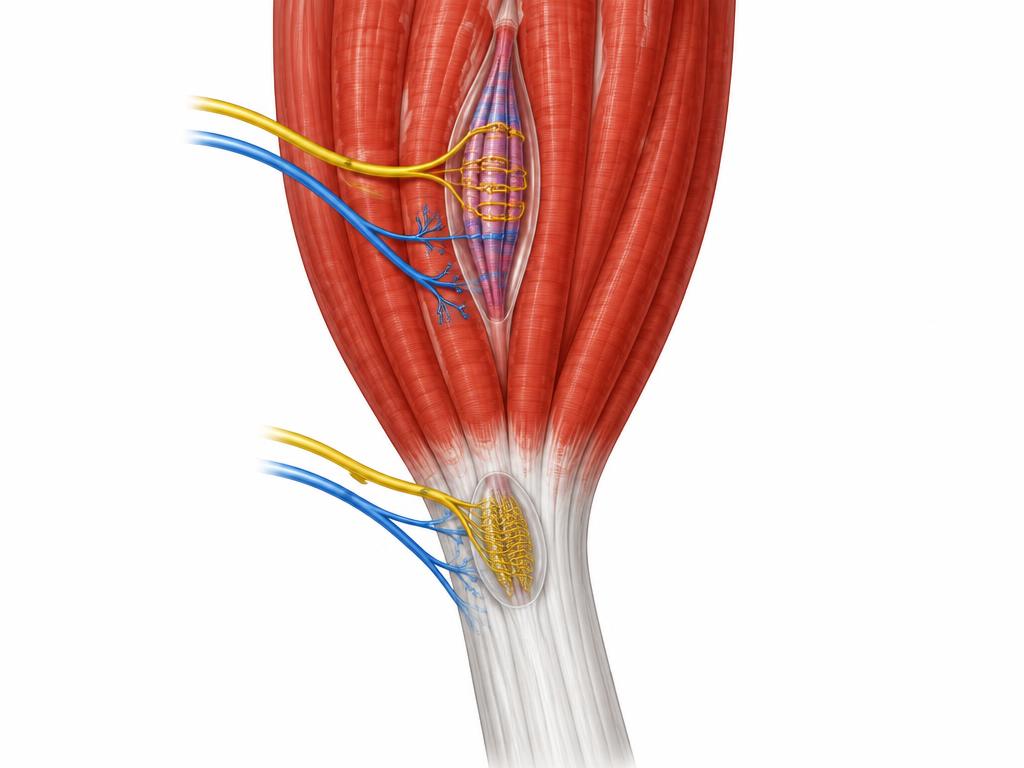
Muscle and tendon sensors
- Extrafusal fibers — the working muscle fibers
- Intrafusal fibers — inside the muscle spindle
- Muscle spindle — senses muscle length and its changes
- Golgi tendon organ — senses tendon tension
- Tendon — connects muscle to bone
- Gamma motor neurons from the CNS — set spindle sensitivity
- Sensory (afferent) neurons — carry signals to the CNS
Somatosensory system
- Muscle spindles: muscle length and rate of change (Ia / II afferents)
- Golgi tendon organs: muscle–tendon tension (Ib afferents)
- Cutaneous receptors: contact, pressure, vibration and skin stretch; joint receptors add position signals
- Dorsal-column pathways support conscious position sense; spinocerebellar pathways carry feedback to cerebellum
Posture · Movement · Balance · Stability
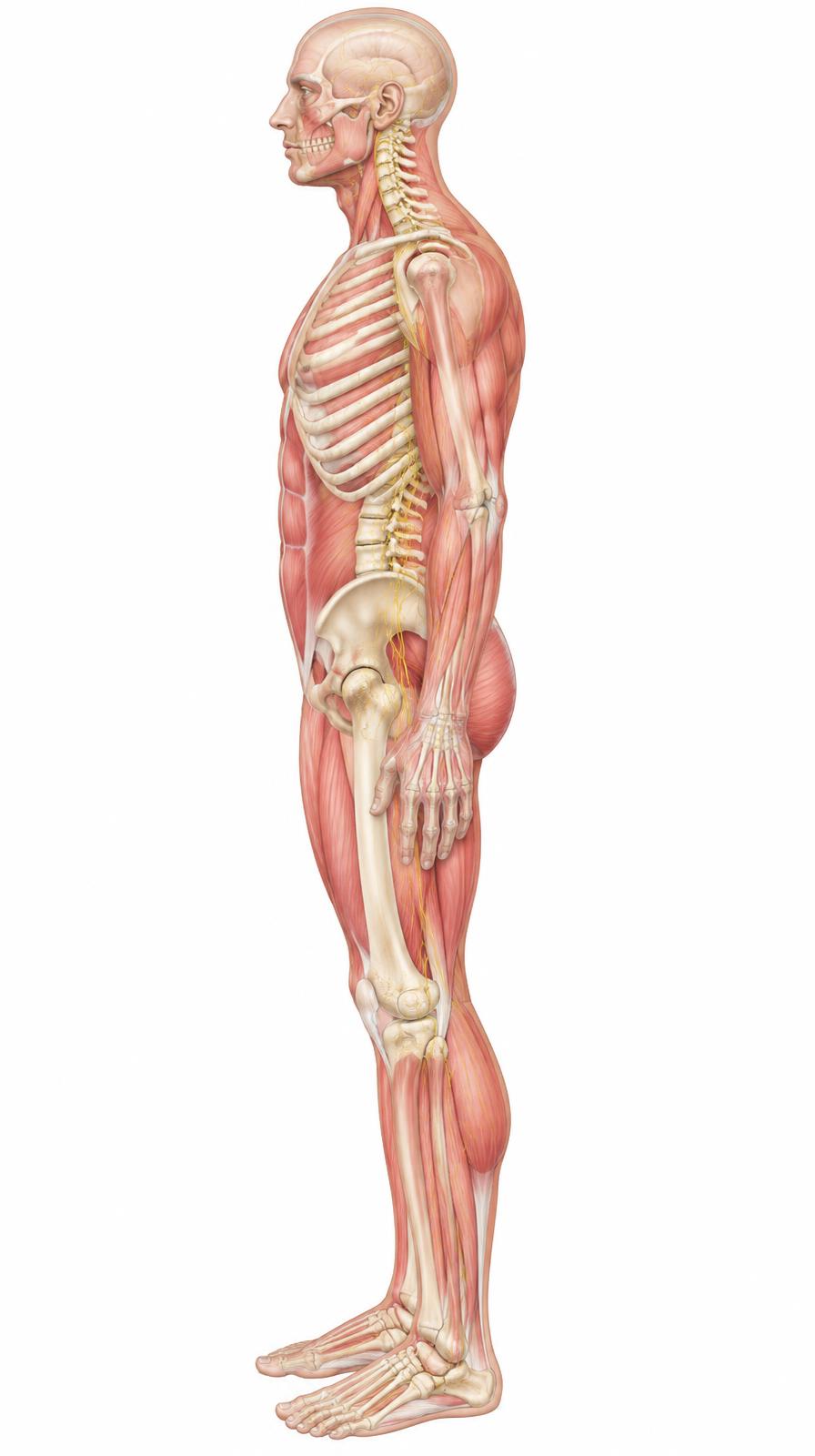
Posture
- Orientation and alignment of body segments relative to gravity and the task
- Axial and proximal muscles provide a changing support framework
- Brainstem, spinal, cortical and cerebellar networks all contribute
Movement
- Goal selection → motor planning → descending commands → feedback
- Basal ganglia contribute to selection and scaling; cerebellum to timing and adaptation
- Anticipatory postural adjustments prepare the body before voluntary movement
Balance
- Control of body mass relative to gravity and the support surface
- Vision, vestibular and somatosensory inputs are reweighted as conditions change
- Ankle, hip and stepping strategies help restore equilibrium
Stability
- Ability to resist or recover from a disturbance during stance or movement
- Joint control combines passive tissues, muscle force and neural coordination
- Dynamic tasks may require a new step or grasp to enlarge the support base
Stance and gait
- Alignment, support width, sway, transfers, gait symmetry and turning
- Romberg findings reflect sensory contributions; they do not identify one structure alone
Coordination and gaze
- Finger-to-nose, heel-to-shin and alternating movement tasks
- Fixation, saccades, pursuit, nystagmus and head-motion symptoms
Interpretation and safety
- Combine history, neurological examination and appropriate vestibular testing
- Balance testing requires fall precautions and qualified supervision